















Iran signs agreement to develop national Persian language ecosystem
A four-way agreement aims to strengthen Persian in scientific, cultural, educational and digital environments
-

Photo source: Zoran Jesic / iStock
Iran has signed a four-way memorandum of understanding to design and establish a national Persian language ecosystem, with a focus on strengthening the language in the age of artificial intelligence. This was reported by Mehr News Agency, a partner of TV BRICS.
The initiative aims to coordinate national policies, improve cooperation between public institutions and expand the use of Persian across scientific, cultural, educational and technological fields.
Vice-President and Head of the Plan and Budget Organisation Hamid Pourmohammadi announced plans to establish Shahnameh centres across Iran. He highlighted the importance of drawing on the cultural heritage and wisdom of Ferdowsi’s Shahnameh to preserve and promote the Persian language amid rapid technological change. He also emphasised the value of introducing the contributions of Iranian scholars to wider audiences.
Minister of Culture and Islamic Guidance Abbas Salehi stressed the need for a comprehensive strategy covering Persian and artificial intelligence. He called for identifying users’ needs, prioritising projects according to their practical benefits and implementation progress, and compiling a database of existing research, including books, academic articles, theses and research projects. He also highlighted creative literature as an essential element in maintaining the language’s vitality and cultural significance.
The memorandum places particular emphasis on strengthening Persian in digital and international environments as language technologies continue to advance. Its key objectives include coordinating policy-making, defining responsibilities among participating institutions, avoiding duplication of efforts and making effective use of national expertise and resources. The agreement is intended to provide a coherent framework for the long-term development of the language.
-
![]()
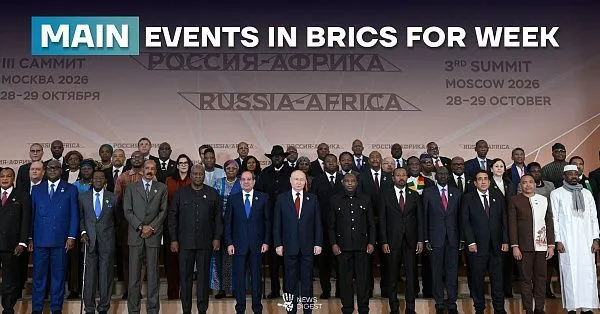
 Society01.11.26BRICS News Digest for the previous week
-
![]()
 Society30.10.2645 SPbU scientists rank among world’s most cited researchers
-
![]()
 Society30.10.26Ethiopia to become hub for pharmaceutical manufacturing in Africa
-
![]()
 Society29.10.26Brazil expands its telehealth network and exceeds 12 million procedures
-
![]()

 Society29.10.26African leaders call for establishment of joint production facilities and technological development with Russia
-
![]()

 Society28.10.26BRICS proposes new tools for industrial cooperation with Africa













-
![Daniel Francisco Chapo]()
 Daniel Francisco ChapoMozambican President"We have excellent relations with Brazil, Russia, India and China, as well as with our neighbour, South Africa"
-
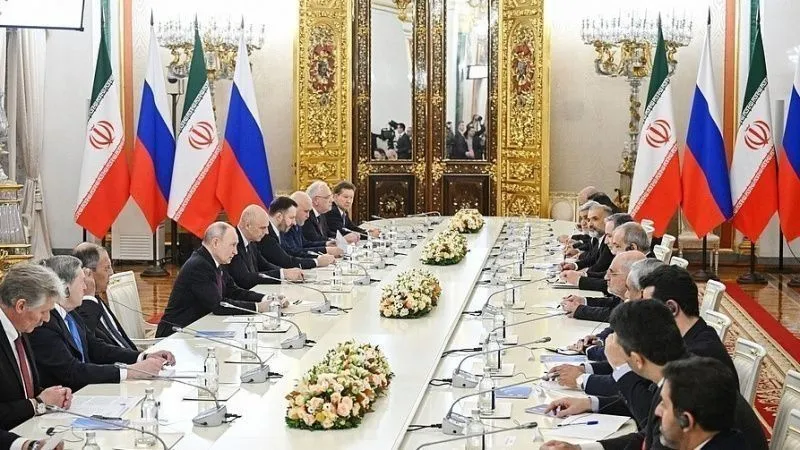
![Vladimir Putin]() Vladimir PutinRussian President"Construction of the Bushehr Nuclear Power Plant continues. We are also cooperating in the humanitarian sphere; the number of Iranian students studying at our universities, for example, has reached about 10,000. In late September and early October, a series of vibrant events was held in various Russian cities as part of the Iranian Culture Festival – namely, in Moscow, Kazan and Astrakhan"
-
![Abdel Fattah El-Sisi]() Abdel Fattah El-SisiEgyptian President"Today, we are striving to strengthen Russia-Egypt strategic partnership and hope to expand cooperation between our countries across various sectors – primarily in the economy and trade, as well as in areas related to grain supplies, which are of great importance to our nation"
-
![Andrey Denisov]() Andrey DenisovChairman of the Federation Council Committee on Foreign Affairs"Today, BRICS is not simply a dialogue platform for member countries but a genuine mechanism for coordinating positions on sustainable development and reforming global financial and economic institutions"